Someone has taken a lot of time to paint the fire hydrants in the Village of Elbow.
Every time I visited, friends would say to me, “You should get photos of the fire hydrants.”
So I did. But what to do next?
I quickly ruled out making prints of individual fire hydrants.
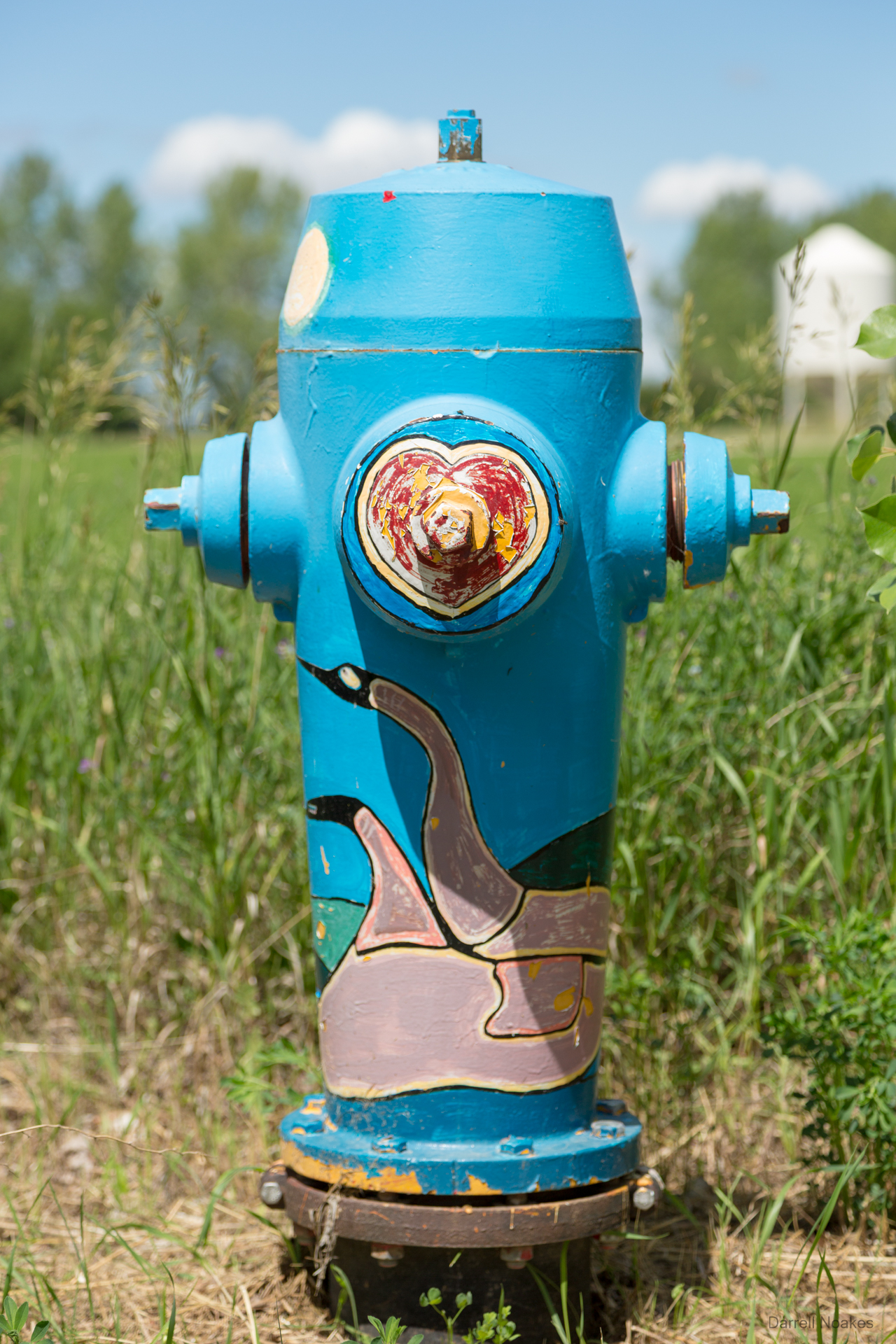
That might produce a useful historical record, but it it didn’t strike me as anything that people would find at all interesting.
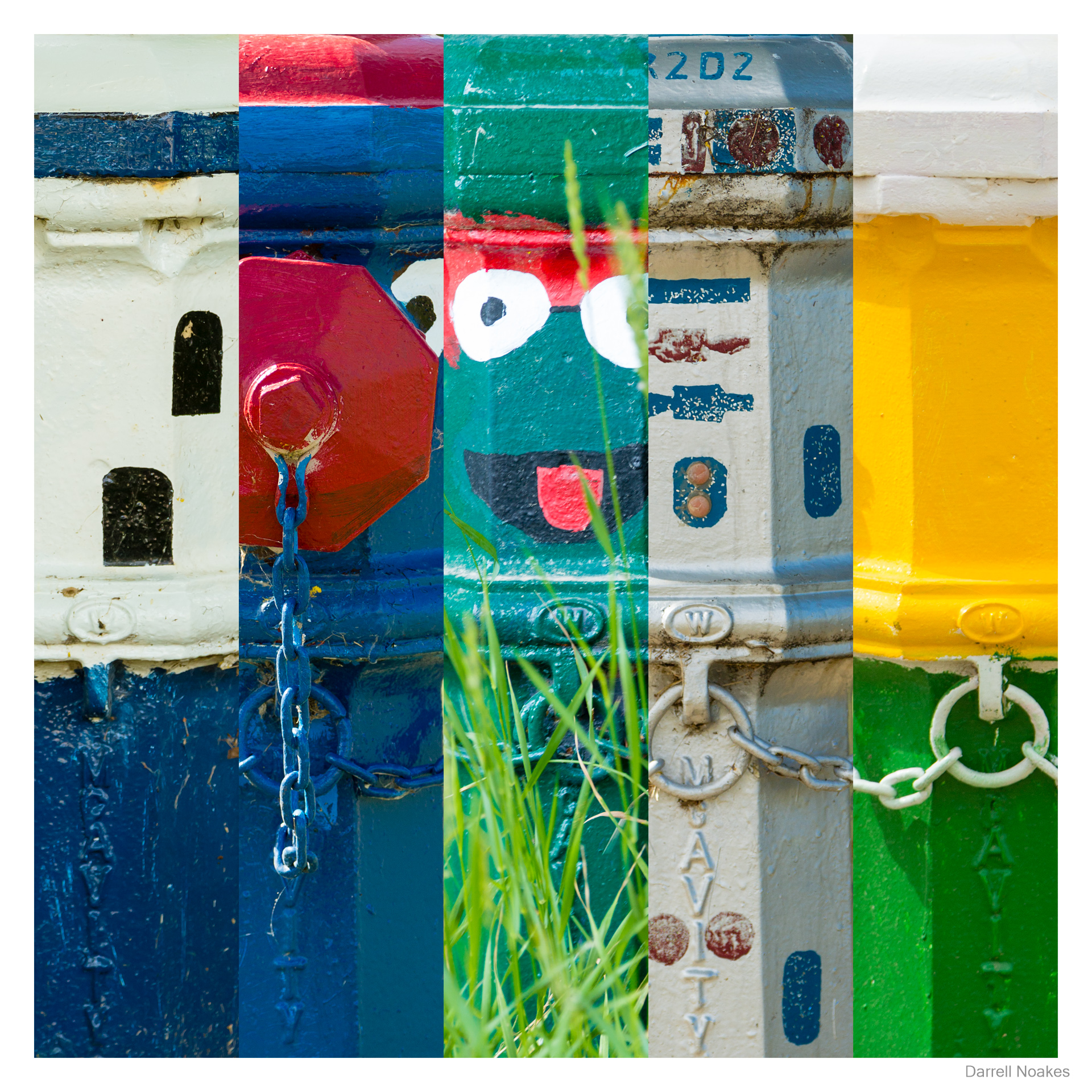
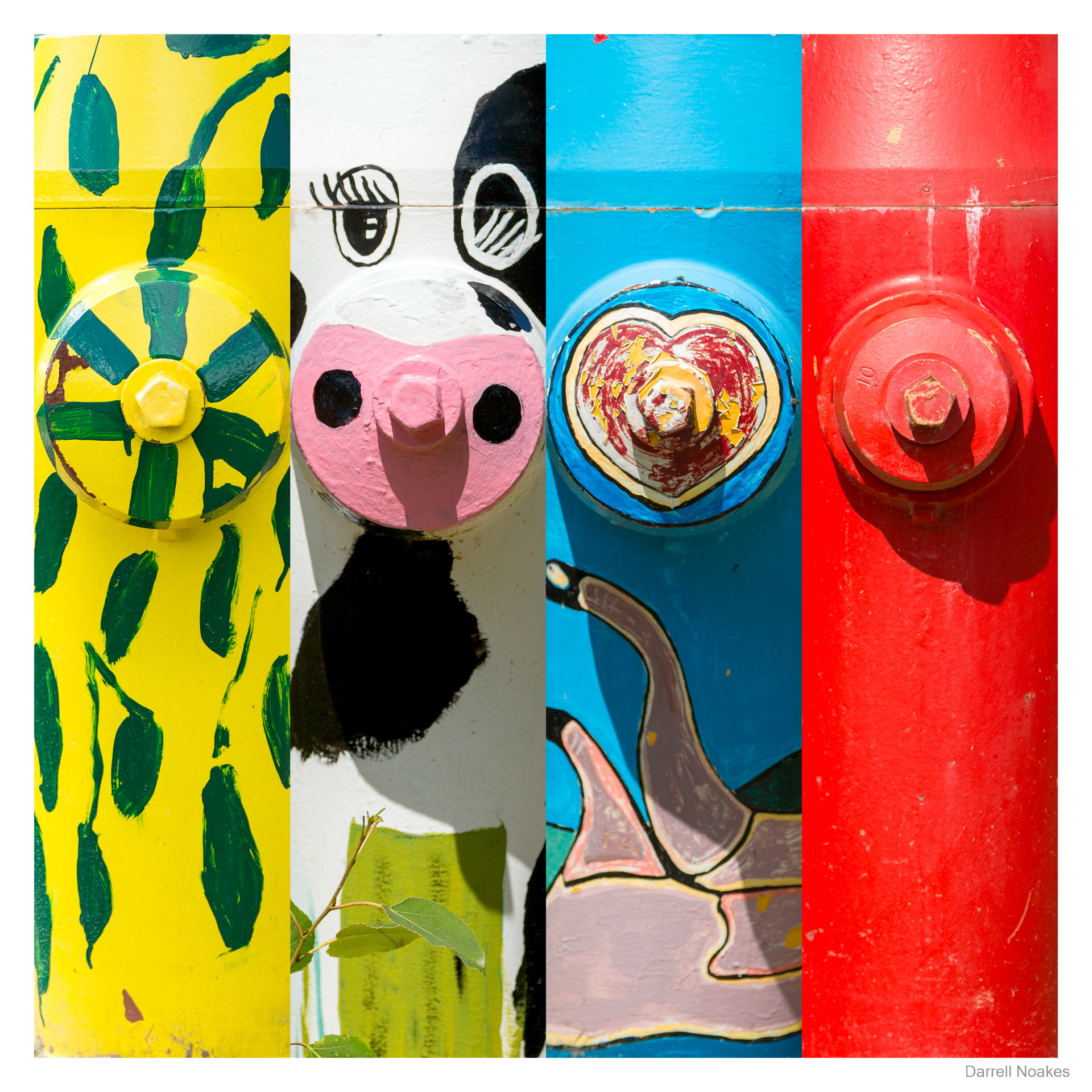
I figured a composite, quadtych (four panels) or pentatych (five panels) composition would nicely emphasize the slender, vertical characteristics of the hydrants.
I experimented with a half dozen approaches, many of them incorporating foreground elements of the ground and background elements of the sky, before deciding that I liked the tight, close-cropped images that I used for the final square prints in the Hydrostatic series.
But then I wondered, what if fire hydrants themselves flowed like water? What could that look like? The result might look chaotic, but not random. There would be physics involved. Unencumbered, a forceful gush of water would be pushed by pressure and pulled by gravity until striking a solid surface that deflects it in ways determined by the force and weight of the water flowing behind it. It reminded me of the kinds of questions we had to answer in high school physics classes.
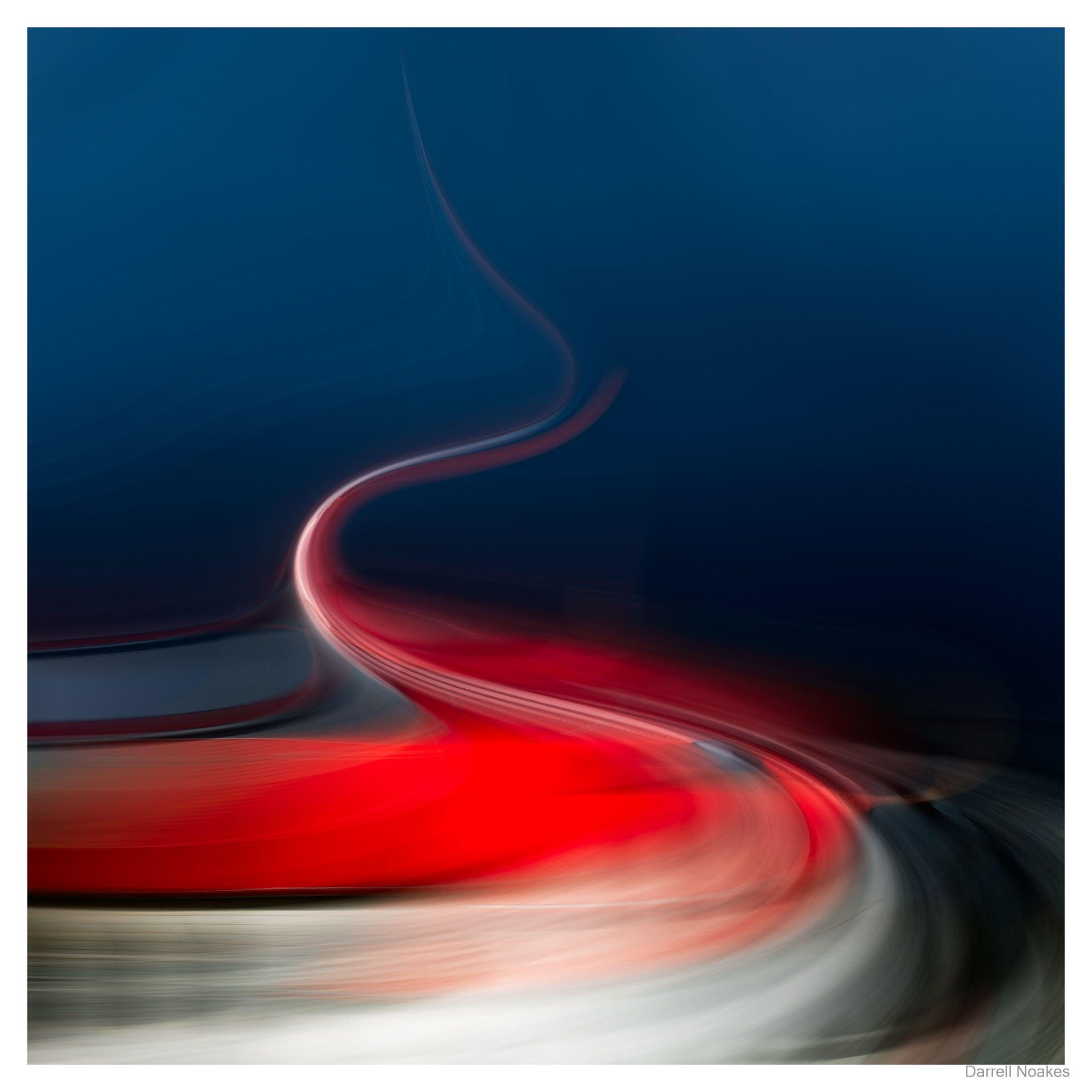
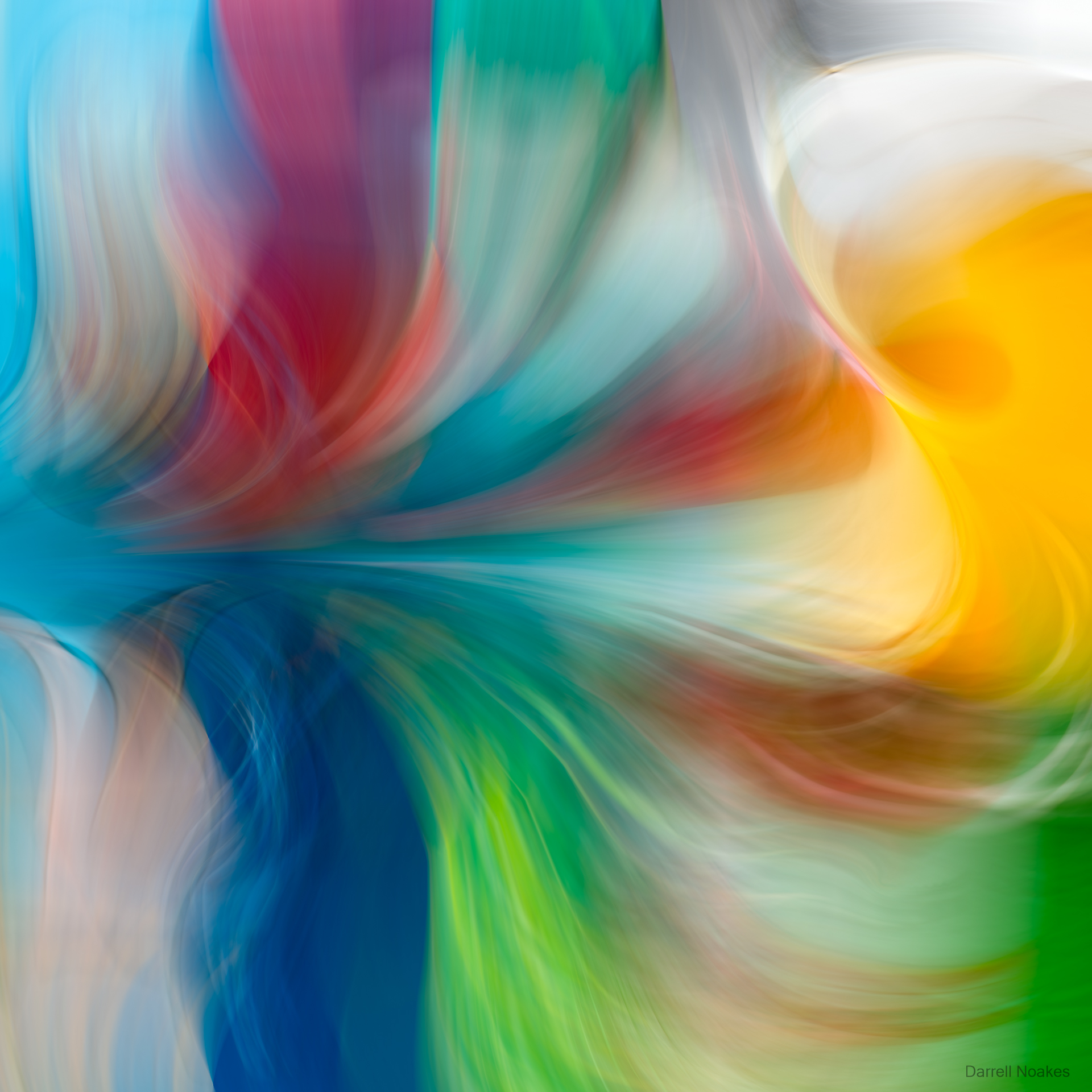
So, I went back to the books, where I found the equations, which I converted into grids that I overlaid on some of the Hydrostatic images. Then I stretched the hydrants so they flowed through the grid. The first iterations flowed only downward, but later ones swooped left and right and up and splashed against one another. I printed my favourites as the Hydrodynamic series.
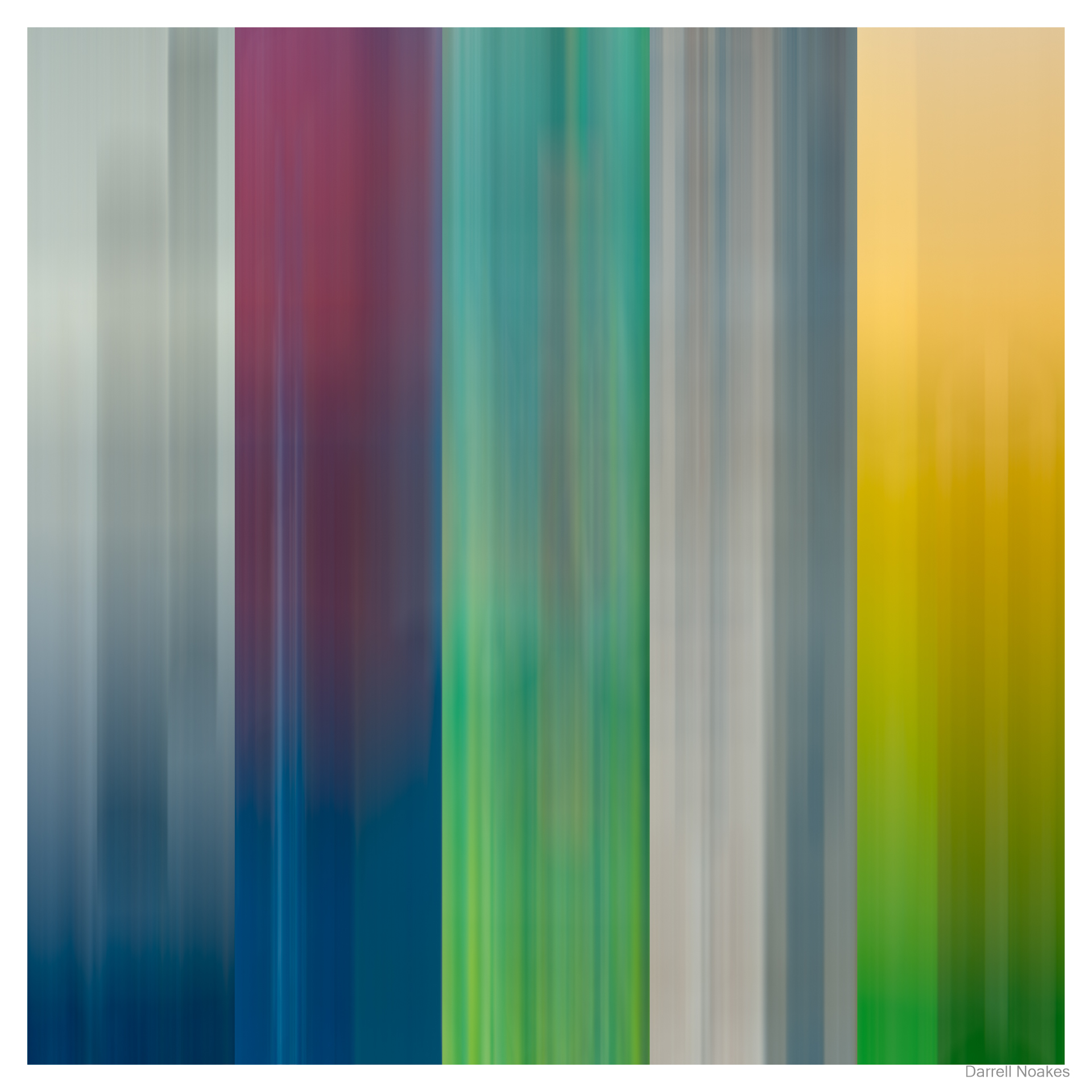
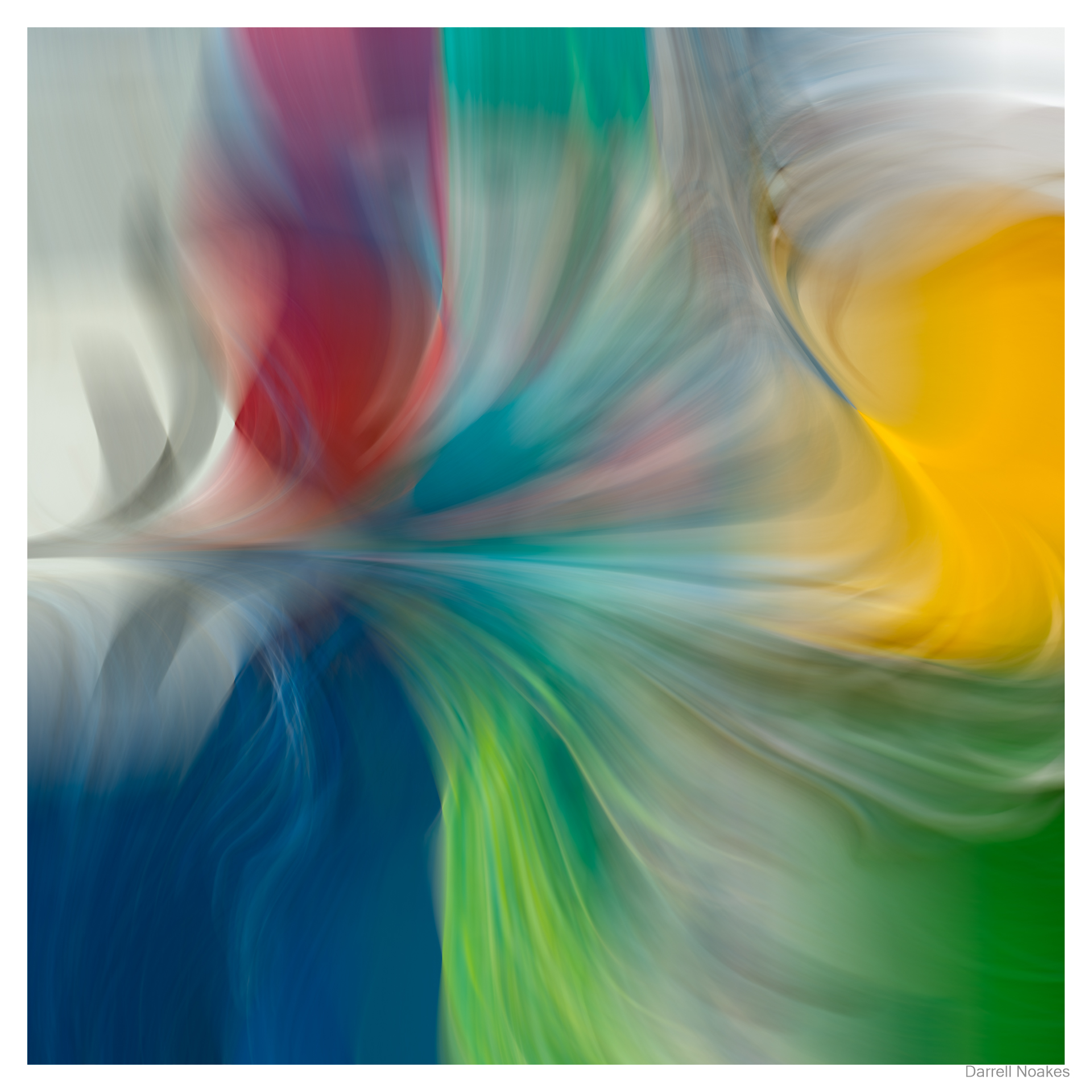
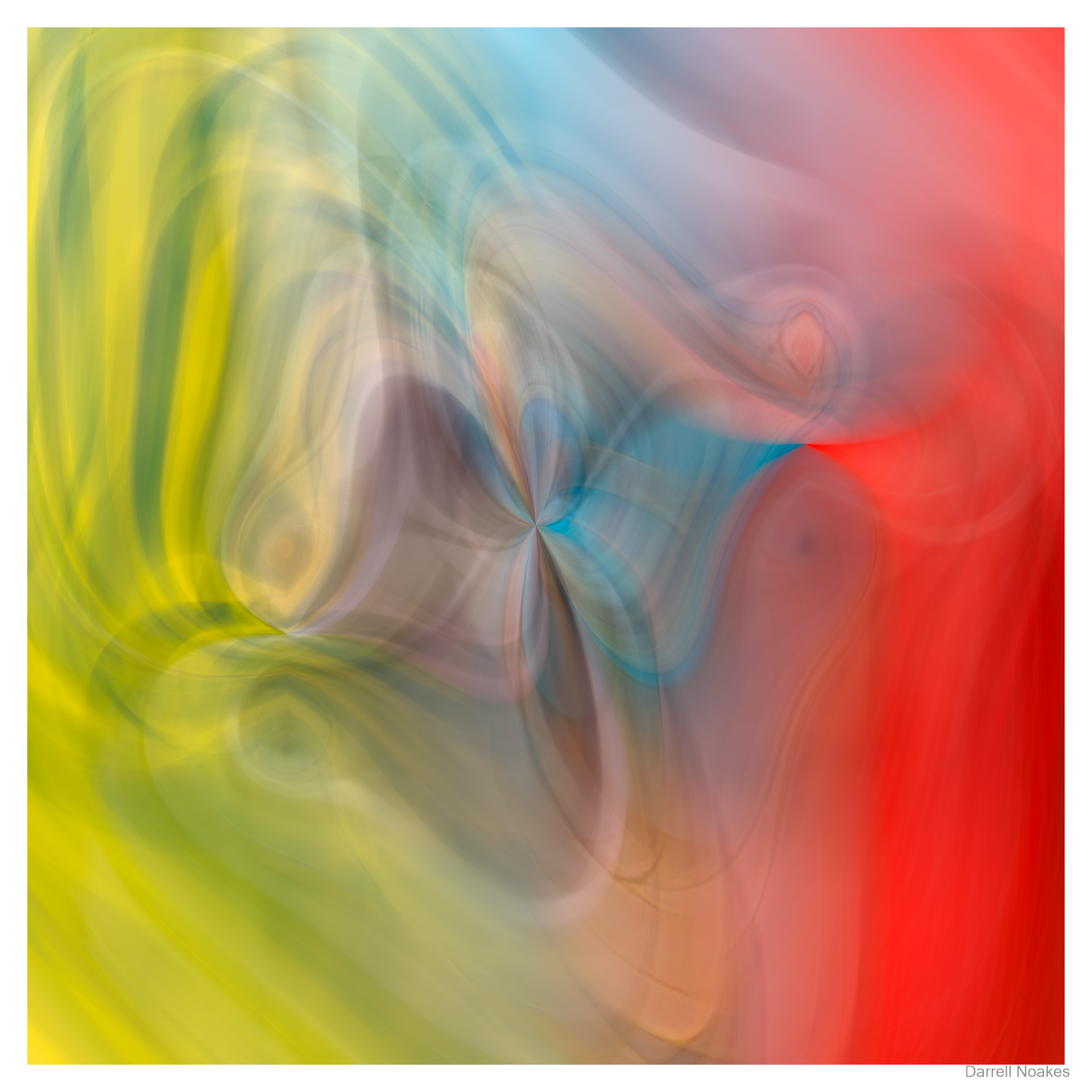
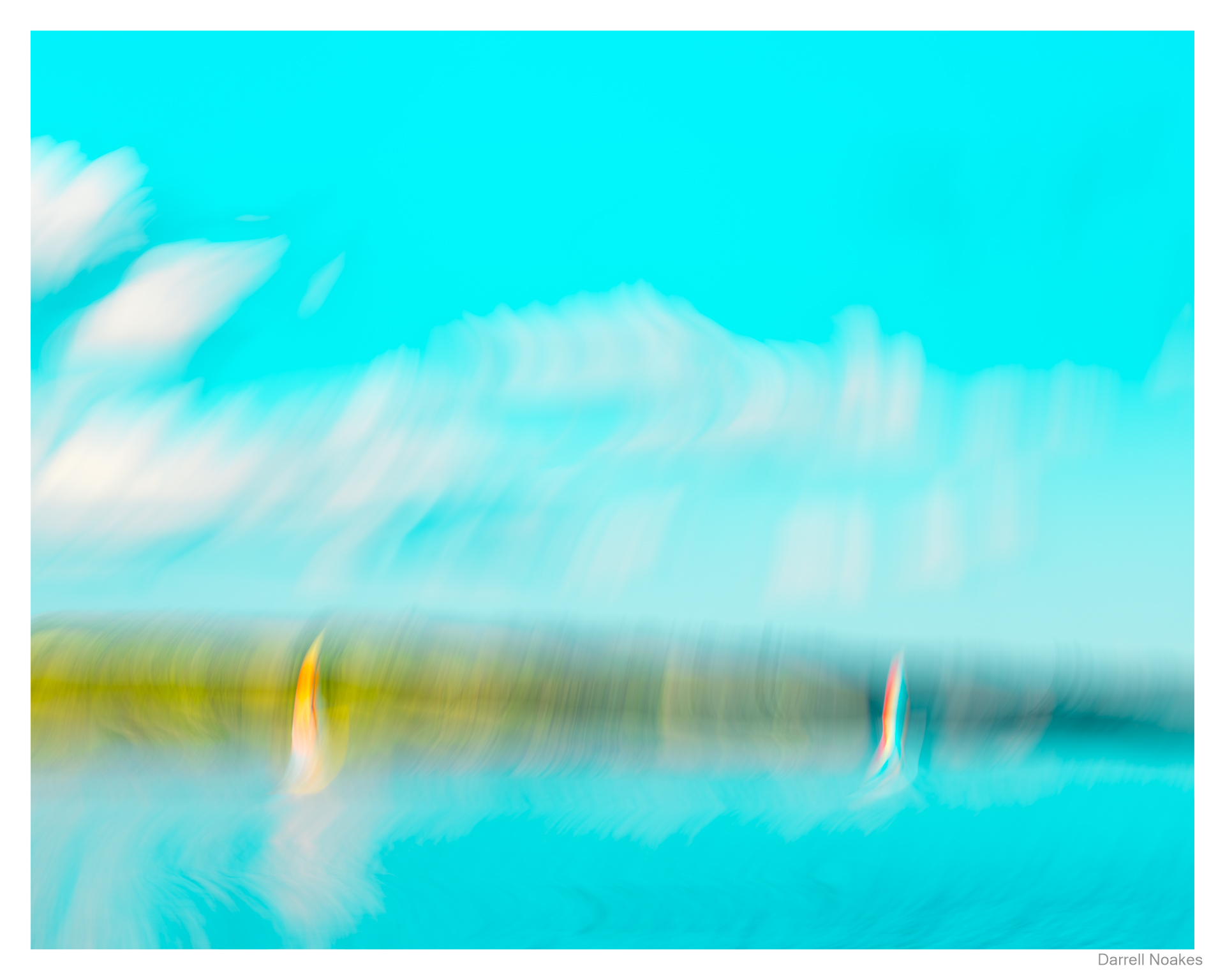
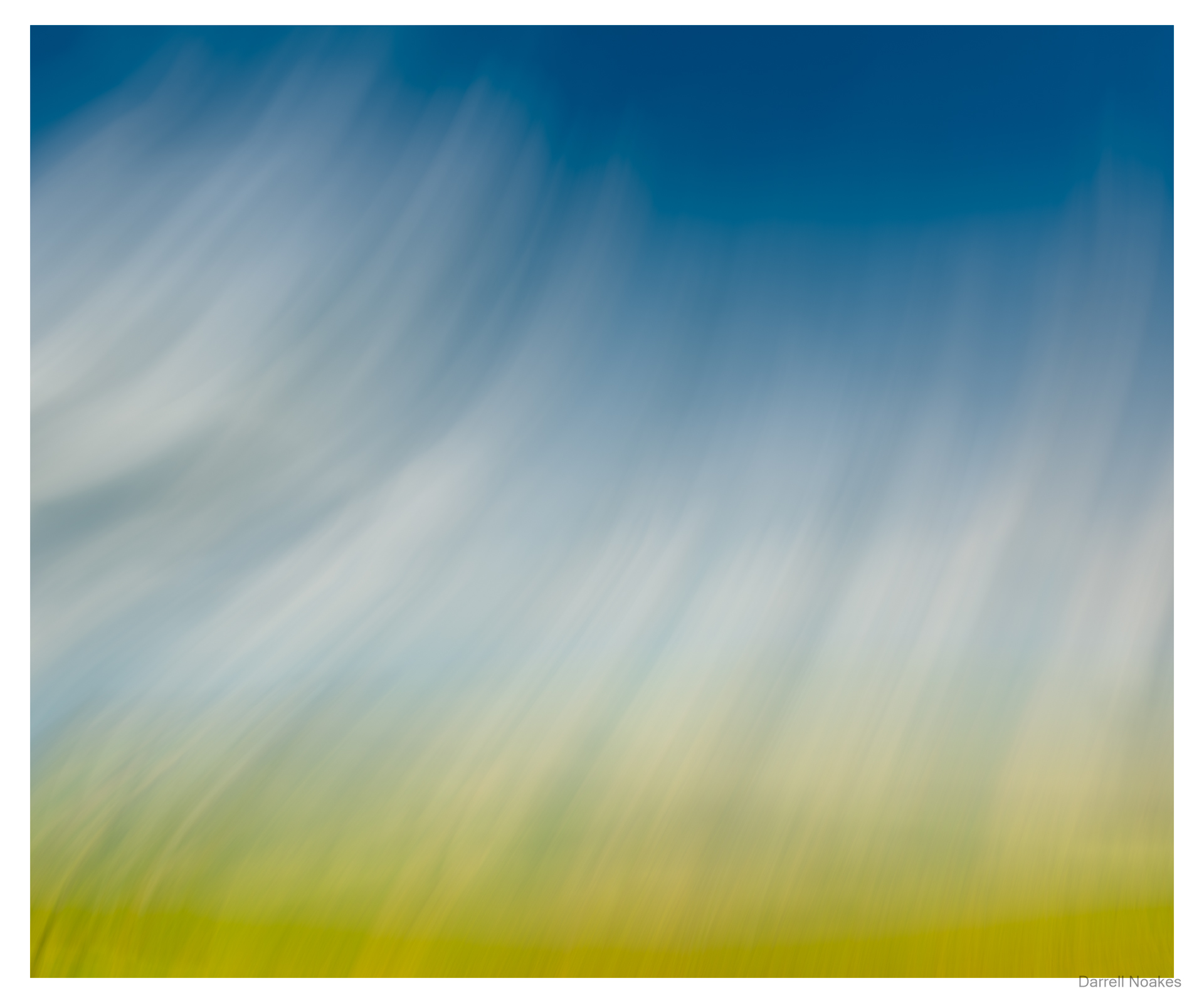
Then I applied the same principles to landscape images in my collection, visualizing how the world might look if the solid objects around us were swept up the same way trees sway in the wind and rain swirls in a violent storm. For the bright, summery images, I remembered what it was like when you close your eyes for several minutes on a hot day at the beach, then open them to squint at the distant horizon with the sky above and your favourite lake or river below. Colours shift, shadows lighten. I printed my favourite ones from these experiments as the Saskatchewan Landmarks, with a twist series.